GTO 3987 on Mulholland

GTO 3987 on Mulholland

Thursday, March 31, 2011

Larry Masser


I have had only one formal agent during the time I've been active as a filmmaker. I'd always created my own work which obviated the need for 'job procurement' as such. That changed when my (Interview) series started attracting interest in the form of deal offers from A-list Hollywood producers. I had no idea what a story idea--the 'underlying property' as it would be designated in contracts--was worth. I felt I should get the advice and counsel of someone who did.

To that end, I short-listed some agencies that had standing in the industry and with whom I could work and communicate easily. I forget now which agencies were on the list but the Paul Kohner Agency and Stone-Masser were. I called them all saying that David Permut was making an offer on a story I had created and asked if they would like to represent me. Not one of them said no. In the end, I went with Larry Masser. He was an epicure, drove a black Corvette, lived on the beach north of Marina del Rey, was politically astute and could hold his own in just about any conversation with just about anybody. I liked him. He was also a partner in his own agency which I liked.

I think Larry enjoyed going with me to meet David Permut or Ron Koslov and it was nice being invited rather than having to knock on doors. Later, when Larry folded his agency to join the Agency for the Performing Arts--well known for its literary department--he graciously asked me to make the trip with him and I was happy to follow him. It was at APA that my first-look deal with Tri-Star was entered into. I don't think it is any exaggeration to say that it took nine months to negotiate the deal, which was complicated by the fact that it was tied to the stories that I was creating in the (Interview) series and had to take into account the possibility that some might be developed for feature films and others for television. Larry and his support at APA were very thorough, as was Tri-Star. At one point, I asked Larry if Tri-Star was really serious about doing the deal as so much time was passing. There was a pause on his end of the phone line where he must have rolled his eyes and made a face reserved for the idiotic pronouncements of a not-too-bright offspring who had overstepped. "If they didn't want to do it, we wouldn't still be talking," he told me with a maximum of forbearance. He was right, of course, and the deal was finally executed.

The post script to the story comes some while later when David Permut, who had arranged for the deal with Tri-Star to happen, realized that he had not been included in the contract. David, who had deals, blind deals and production deals all over town, had been left out of the equation. So it was that Larry received a phone call from David who tells him he has been left out of Stephen's Tri-Star deal. In the driest possible way that would have bested Wodehouse's Jeeves, Larry Masser responds with, "What do you want, David?" "I want to be included on the deal," says David, or words to that effect. After a pregnant pause, Larry tells him, "We can do that."

That brief exchange between the two men is how I remember Larry Masser--bright, sharp as a tack and not above pulling the leg of a mega-bucks, Hollywood producer who, it seemed, was momentarily over a barrel. A good fellow to have on your side.

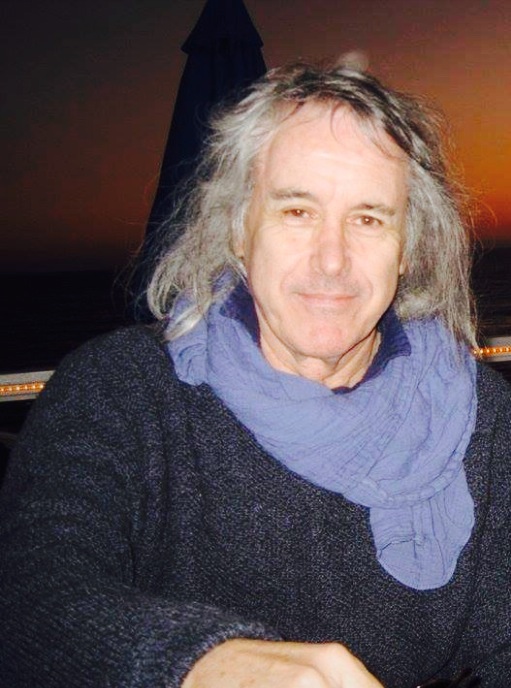
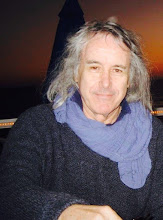
I recently enjoyed having lunch with Larry at a restaurant he suggested saying, "You never know who you'll run into there." Only three tables were occupied in our section. A gentleman at one of the tables kindly snapped our photograph. Seated at the other table was Mick Jagger.

Monday, March 28, 2011

Kathi Carey as Marilyn Howell-Becker


The third segment of my series (Interview) featured actress Kathi Carey in the role of Marilyn Howell-Becker, reputedly the richest madame in the world with maisons closes in Beverly Hills, New York, Paris and London. The houses earned her substantial amounts of money which she re-invested under the tutelage of her husband Jeffrey Becker, a principal in a successful investment brokerage. The title of her book, "Circle of Influence", pointed to the fact that she attracted political and industry leaders as clients and friends creating a protective bubble around her and her enterprise in addition to providing a resource pool for inside information in aid of her stock trading.

The story tracked Marilyn's rise to prominence and wealth which suddenly halted when the son of a British Member of Parliament committed suicide in her London establishment--an event that brought public focus on Marilyn and her enterprise in a way that law enforcement could no longer ignore. The upshot of the young man's tragic end was that Marilyn spent two years in Her Majesty's prison system. During her incarceration, Lisa Thompkins, Marilyn's right-hand and long-time friend, took over the running of the enterprise but lacked Marilyn's skill and finesse. Ultimately, Lisa absconded with five million dollars of Marilyn's money.

The segment produced a great many phone calls and inquiries as it was a sensational story with some intriguing, on-going loose ends and Kathi's performance, which offered a mix of cool arrogance and troubled underlying regret, was as compelling as it was credible. One of the phone calls I received was from an individual who introduced himself to me by saying, "I am an old friend of Ms Howell-Becker and would like to get back in touch with her." Since MH-B was a fictional character, I found his introduction intriguing. He had not seen or understood why there was an actor's credit "Marilyn Howell-Becker was played by Kathi Carey" at the end of the program before my phone number appeared and, like many others, assumed he had been watching a real interview. Whenever a viewer made this mistake, I always spoke up quickly to point out that the interview was fictional. However, since the gentleman's first words to me alleged a personal friendship with Marilyn, I stood silent on the occasion.

I gave the caller an address and told him that if he were to write a letter to Ms Howell-Becker, I would pass it on to her. I didn't think it would go any further. It did. Within a few days, the letter arrived and its content explained the writer's motive for making contact. The framed letter has hung on the wall of Kathi's office since that day as one of many mementos of our long association and a scan is presented here below. Though we never followed up with the gentlemen, many have advised us, perhaps not so tongue-in-cheek, that we should have put him on the job in the hope that he might have recovered the five million dollars. Would that he could...

The letter and relevant portions of the interview can be seen here below.


Thursday, March 24, 2011

An actor prepares‏


There was a period when I spent time riding with an LAPD unit in various parts of the city--first out of Parker Center in downtown, then out of Van Nuys Division and later out of Venice. Each area had its unique qualities and each seemed to have its own proclivities. What a citizen might not even register as he or she passed through one of these areas pegged the needle when viewed through the windshield of a patrol car. The very presence of a black and white seems to create an energy shift in which all the players unwittingly identify themselves. If ever one has the opportunity to take the ride, my advice would be to jump at it.

I have a problem with most police fiction. I thought Eastwood and McQueen did excellent character work in Dirty Harry and Bullitt. My favorite literary cop is Hieronymus Bosch as written by Michael Connelly whose depiction of law enforcement most closely reflects the reality I observed while managing to be suspenseful and entertaining. It is what I tried to depict in my movie Bleeder & Bates, an experimental exercise in guerrilla filmmaking that we distributed directly on video, which portrayed a journeyman detective knee-deep in someone's hidden agenda that he might not survive. What most on-screen cops lack is the consequence of the young man's dream in conflict with the adult's pragmatic reality. Some are defeated and others are resolved. None are indifferent to the effect police work has had on them and they make for compelling characters in existential storytelling.

I found myself preparing to do a another film--what the French refer to as a policier, a cop drama--with Patrick Tanzillo, an actor who was also a friend. He had a great personality but knew nothing about policemen or their world. I decide to give him a glance. One night we went out together in his rather plain Ford Torino. I had recently issued a casting notice and had three canvas bags left by the postman full of envelopes containing actors' 8x10s and resumes. From these I selected a 5x7 photo of a an actor that did not have a name and talent agency logo printed on it. At about ten-thirty that night, we ventured forth.

Our first stop was Pink's Hot Dog stand on La Brea Avenue in Hollywood. Patrick pulled to the curb and we sat watching the customers lined up to buy their chili dogs. I held the photograph in my hand. It didn't take long before someone became curious and approached. "Good evening," I said before he could speak. "Have you seen this guy?" I held up the photograph so he could see it. "No, I don't recognize him," he said after studying the picture. "What's he done?" he asked me. "Don't know but I'd like to find out," was my response. Then he told me, "My cousin works Rampart Division." I smiled and said, "Sorry to hear it." He laughed and we moved on to our next destination.

Cruising slowly on 6th Street near Alvarado, we saw a couple of pedestrians. We gave them a good look as we went by and one of them called out, "Pigs!" Patrick was getting the idea. A little later down by Los Angeles and 8th, a fellow approached us. "Have you seen this guy?" I asked him. After staring wide-eyed at the photo for a few moments, he said, "Yeah, I seen him at the bus station about a half hour ago!" I thanked him and as we were about to drive away, I asked, "Have you ever done time?" He answered, "I done time but I made restitution." I asked him what was the charge. "Aggravated assault," he told me with a smile. "What did they wind that down from?" I asked. "Attempted murder," was the answer. I thanked him for his help and wished him a good evening.

Our last stop was on Sunset Boulevard near N. Beaudry Street. We pulled up to a bar that had saloon-style swinging doors like in a movie about the old West. Inside, there was a long bar to the right and pool tables to the left. The jukebox was playing Latino music. We entered and, by pre-arrangement, Patrick slowly walked the length of the bar, glanced into the restroom at the back of the establishment and slowly walked back to where I was standing at the entrance holding the photograph and comparing it to the faces that were staring at me. Patrick and I exchanged a few words before going outside and getting into the Torino. We made a U-turn and as we passed in front of the bar, most of the patrons were peering at us over the swinging doors wondering what the Hell had just happened.

As I left him that night, Patrick enthused that we had done more work that night than the police. It was an interesting adventure and gave him a viewpoint he did not have previously. The movie we ended up making wasn't a cop drama after all, but a love story, Woman on the Beach. Go figure!

Sunday, March 20, 2011

Peter Helm


Peter Helm was--and still is--one of those characters that are bigger than life and would be entertaining, if improbable, in a novel. He is a rare individual entirely unaffected by peer pressure or a need to conform. We hit it off immediately and forty years later nothing has changed. I first met Peter through Matthew Ettiinger and our get-togethers usually involved high-speed antics with Peter in his Ferrari California spider and Matthew and I in the Breadvan and GTO respectively. Matthew's nightclub, the Plush Bunny, was often the venue but Peter's interests were wide ranging and included Joey Heatherton, remote-controlled airplanes and doing things at all hours of the night. Sunrise was only an indication that things were progressing satisfactorily.

On one occasion, I was following Peter on the freeway after we'd been to Matthew's house in Hacienda Heights. I was a few lengths back with the GTO in the number two lane and was suddenly aware that no one was driving Peter's California spider though it was setting the pace in the fast lane. I dropped into fourth and accelerated to draw next to the spider to find that, though Peter was not in the driver's seat, he was indeed in the car. He was lounging in the passenger seat enjoying the view as the Ferrari sped along being driven, apparently, by the invisible man. Peter had his left foot on the accelerator pedal and his left hand on the steering wheel out of view from other drivers including me. It was a hilarious sight and he drove like that for many miles before getting back behind the wheel. I still wonder if his leg was long enough to reach the brake pedal should it have been necessary.

On another occasion, Peter and I were heading south through Laurel Canyon. As we raced down the Hollywood side, we came upon a slower moving Mercedes-Benz SL. We were going fast enough that slowing down--at least in Peter's mind--was not an option. As we passed by the country market in the canyon, Peter went around the SL and had just enough room to pull back into the lane again before the blind curve at the end of the straight. Unfortunately, the move served to tighten the radius on the turn to such an extent that his Ferrari lost traction and the last sight I had was of the California spinning out as it rounded the curve.

What I expected to see as I came around the bend was Peter and his California wrapped around a tree. What I saw was Peter continuing to pull away from the Mercedes driving--freewheeling--backwards looking over his shoulder and negotiating the series of tight turns near the bottom of the canyon. No doubt the Mercedes driver had intended to impress his attractive passenger that evening. I wonder how impressed she might have been that he was beaten out by someone driving backwards down the canyon.

Peter captured a couple of our adventures with his 8mm camera (See video below). There were many more that escaped his lens, I am happy to say. His California spider painted as an Army jeep and his Ferrari Tour de France painted with tiger stripes were epic Peter Helm offerings along with the incident where a traffic cop cited Peter's passenger for speeding down Gower Street in Hollywood one night because he didn't realize Peter's Ferrari was right-hand-drive.

Peter worked on such films as The Longest Day and The Andromeda Strain being directed by Darryl F. Zanuck and Robert Wise. He is an aviation buff and my son and I visited a B17 with him at Camarillo Airport where we also got to see a B25J on which Peter crews and contributes his time for maintenance and repairs. The photo above was taken at one of my Wednesday night gatherings. On that occasion, Peter had Joey Heatherton in tow and she trumped some unwitting newcomer's story about Frank Sinatra with one of her own, as you might imagine.

Every time I see a certain scene in The Big Lebowski, I am reminded of Ottie, Peter's otter that went almost everywhere with him. My favorite Peter Helm anecdote is about the night Peter hit a bump at speed on Mulholland Drive causing the chassis to flex, the passenger door to open and the actress Tuesday Weld to be bounced out of the car. Does it get any better than that for a car guy?

Tuesday, March 15, 2011

Larry Crane and his Carrera tribute Ford


Over the weekend, Larry Crane made himself and his Carrera Panamericana tribute car available for filming in the hills surrounding the Griffith Park Observatory. The footage will be used in our documentary and it was great fun hearing the sound of squealing tires and experiencing body roll--a flashback to earlier days!

Monday, March 14, 2011

Sunday, March 13, 2011

A part of GTO 3987‏


When the time approached that GTO 3987 was going to a new owner, it occurred to me to keep a souvenir--a piece of the car that was significant and with which I had a personal connection. I felt it should be something that was--at a glance--unmistakeably Ferrari and, to the trained eye, GTO in provenance. The gear shift knob seemed the perfect choice. Unlike Ferrari street machines that were fitted with plastic--or in the case of the Lusso, glass--knobs, the race cars of the era were given solid aluminum knobs. Other than the steering wheel and foot pedals, it was a piece of the car with which I had the most contact in controlling the car.

A few years later, a person who had been allowed into the family departed with a number of my possessions that she inexplicably felt entitled to take. Among them were some hand-signed and numbered colotypes, various antiques I had collected, a spare set of Borrani wire wheels for the GTO and--the gear shift knob. It was the last in a series of inexcusable acts that had been going on for fourteen years.

Last night, I attended a family gathering at which one of my sisters took me aside saying, "I have something for you." She unwrapped three items and laid them before me on the table. The first was a Ferrari Owners Club badge in new condition that would normally be attached to the front bumper of a car. It might have been issued by the Los Angeles club or, possibly, the British FOC of which I'd been a member. The next item was definitely from the British club--a pin that bears the words "Prescott Badge Bugatti Owners Club". Hanging from the blue oval is a small red rectangle with the words "Ferrari Owners Club" and two additional rectangles below for "1970" and "1971". The third and most significant item was the aluminum gear shift knob from 3987.

My sister had discovered these pieces in the course of helping the above referenced person into an assisted living situation and suggested that, "These should be returned to Stephen" and thus they came back to me after forty years.

Sunday, March 6, 2011

John Fitch


I had the pleasure of spending the better part of a day with John Fitch at his home in Lime Rock, Connecticut as he had graciously agreed to go on camera for my documentary on the Carrera Panamericana. I prepared for meeting him by reading the available books and articles that have been written about or by John. I was also able to watch a number of videos that featured him. Nothing, however, prepared me for the man who greeted me.

To say that I have met some extraordinary people in my travels would be an understatement. I've spent time and conversed with individuals who have changed the world in which they lived--Enzo Ferrari, Steve McQueen, Marlon Brando, Sammy Cahn, Shelley Berman and Juan Manuel Fangio to name a few. Seldom have I been in the presence of someone who has accomplished so much and possessed such an unlimited enthusiasm. In trying to describe John to my associate Ron Kellogg, the best I could do was to say, "Where you would expect to find arrogance, there was only joy."

John spent an hour in front of my camera answering questions that he'd no doubt heard from others and a few that he claimed were new to him. I learned more than a few things about John's role in the Carrera Panamericana that I'd never read or suspected. I was surprised to learn some interesting facts about his involvement with Corvette at Sebring. He recounted some very interesting details about Le Mans where he raced with Mercedes and Corvette. We weren't too far into our interview that I realized John Fitch is an under-reported treasure. At the end of the hour, as we were about to shut down the camera, John asked, "Do you want to do some more?" Yes we did and, for another hour, the camera continued to capture the magic John had to offer.

At the end of the second hour, John escorted us out to his garage where he showed us the Fitch Phoenix. If you have seen photos of the car--or had the privilege of seeing it in person--you may have noticed a resemblance to the Mako Shark and the 1968 Corvette...

At one point, I asked John if he could ever have brought himself to ride as a navigator in a race like the Carrera Panamericana or the Mille Miglia. He laughed and said absolutely not, which came as no surprise. He added, "The driver is an optimist. The passenger is a pessimist!"

Suffice it to say that John is the consummate optimist.

Wednesday, March 2, 2011

Confessions


The Confessions promo shown here was recently salvaged from a VHS cassette. A description of this Internet soap opera can be read here.