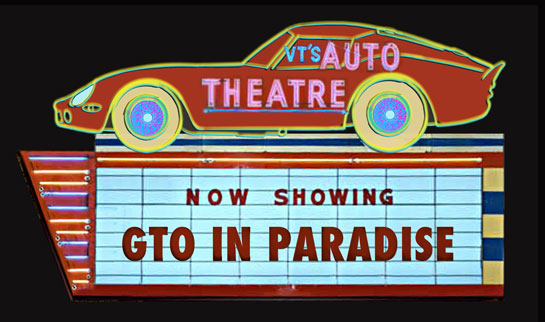
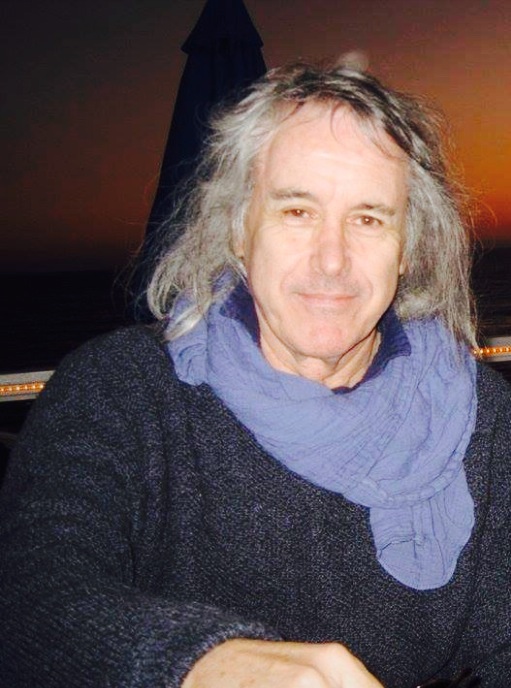
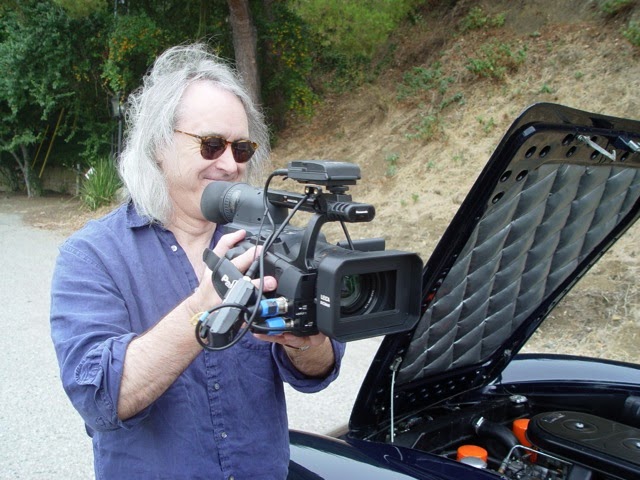
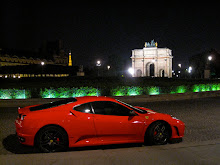
GTO 3987 on Mulholland

GTO 3987 on Mulholland

Wednesday, August 31, 2011

Ferrari GTO at 140 mph


There is something special about late night/early morning motoring that goes beyond the absence of traffic. The darkness combined with the cooler air seems to add horsepower to the car as well as the dream and I used to do quite a bit of this on my way home after a night at Matthew's night club and the ceremonial three AM breakfast with selected companions.

One night, or early morning, I was headed home on the freeway at what I would call cruising speed. The GTO had a rev counter but no speedometer, so it was all seat-of-the-pants, so to speak. Nearing home, I turned onto my exit and waited at the end of the off-ramp for the traffic light to turn from red to green. It seemed to take forever and though no one else was on the street at that hour, I (inexplicably) waited for the green light reflecting, perhaps, on the events of the evening. When it finally turned green, I saw red. It was the red light from a California Highway Patrol car which pulled up behind me. "Pull to the side of the road," came the metallic command from the P.A. I did as instructed.

As the patrolman and I exited our cars, he came towards me with an incredulous smile saying, "If you hadn't stopped for the light I'd never have caught up with you." I mentally filed this in Notes to Self and prepared for the worst. His next words were: Can I see the engine?

He seemed to know what he was looking at, noting the six carburetors, twelve velocity stacks, and two distributors. He took his time enjoying the sight and I wasn't going to rush him. He asked about the redline. Usually 7000, 7500 on birthdays and special occasions, I told him. He used his flashlight to examine all the interesting bits in the engine compartment. I couldn't help noticing his citation pad tucked under his arm. Again, no need to rush him.

Finally, he'd seen all there was to see and had, no doubt, committed it to memory. Had he a camera with him, I'm certain he would have asked to take a picture. "Do you know how fast you were going?" Under any other circumstances, this would be a cool question that I would attempt to answer but before I could decline, he went on to say, "I clocked you at 140 about four miles back."

As I began to think about whom I could rouse from bed at that hour to bail me out of jail, the patrolman said, "Try to keep your speed down while you're in California, okay?" Absolutely okay, I thought!

And so it was that we parted company as the sun was coming up, the Nevada plates going far beyond the call of duty on this occasion.

An addendum from Ed Niles:

"Reminds me of the time that the FOC had a group (“Ride’n’Drive”) going to Las Vegas. We got caught in a road block after the eye in the sky spotted us, and the first one to whom the officer spoke was Walt McCune, who flashed his LAPD sergeant’s badge. Next in line was Bruce Sand, who showed his Sheriff’s Reserve badge. Turning red, the officer went back to poor Dan Ward, and said, “I suppose you’re a [expletive deleted] cop, too!”
Proving that cops are human, we too got off with a warning.
Keep on keepin’ on with the great tales. Ed"

Sunday, August 28, 2011

Ferrari 365 California spider


This from my friend Serge Dermanian in France:

Stephen,

Remember the Citroen SM? In 1973, I was awarded the franchise for that french car for my High Performance Cars dealership in Waltham, MA. In Fébruary 1974, Mr Paul McDonald came to my showroom with his friend Skip Barber to test drive my own company car, a brown Citroen SM. After the test drive, Skip gave his approval, for Mr. McDonald to purchase my car. Great! But not so great because, "I have a car I am asking you to take in trade." What was it? A 1967 Ferrari 365 California spider (s/n 9849)
!

I told him "OK" but I had to see the vehicle. I knew about the California spiders and a few had passed through the store. That was a time when a NY Bronx car broker was bringing in lots of Ferraris from Italy as the strength of the dollar was convincing overseas owners to get rid of their cars. I remember having a rare Michelotti-bodied, blue 250 GT in the NY warehouse.

The California was brought in for a test drive and appraisal It had good oil pressure, the gear box shifted well without any second gear grinding. However, the steering was very hard! The odometer showed 31,074 miles. The problem was that the paint was terrible; a partially faded burgundy. The Borrani wheels were slightly pitted. I noticed that the front pop-up fog light doors were welded shut and under the hood, the power steering pump was missing. Upon further investigation, I found all the missing items just thrown into the trunk! It looked like a junk yard with lots of small parts including the two pop-up light assemblies. That was good! I inventoried all the parts and thanked God they were there. Some small items I had to order from Ferrari and we were fortunate in those days to find practically all parts in the States.

The California's original teak dash was in good order and the Blaukpunkt radio & power antenna and power windows were all working. The black leather seats were fine. The convertible top was in fair condition but this car had been sitting outdoors on a used car lot in New Hampshire and the rear plexiglass window had chalk traces of a dollar sign & would you believe it? The price was $3,500!


I started the restoration work, doing it myself and making a list of parts. I still have today the original parts layout of the power steering system, driven by the left bank camshaft. As I dismantled the car, I found that all the trim pieces, handles, grill, etc. had the 9849 number inscribed--even windshield posts, inside the chrome! When stripping off the paint we found green paint and, under that, the original white paint.

If anyone has the 1990 first quarter Prancing Horse N°94, I had written the story of that car, in that issue, for David Seibert. I am not going to redo my old story, but will add this: the windshield was broken while in storage in Abko Auto body. No one had a windshield in stock, not FAF (the Ferrari store of Atlanta), not the factory. What to do?

I had found an advertisement in Autoweek magazine from someone offering to re-manufacture any windshield as long as you send them the old glass. I air-shipped the broken glass with no word as to how long it would take. After many attempts, I failed to reach them on the phone because the phone had been disconnected! Luckily enough, I had a customer, a Khamsin owner, who had a body shop supply business with an office close to the windshield specialist. There he found that the doors had been locked by the police because they were using the windshield business as a front to bring drugs in from Mexico! My friend succeeded in convincing the local sheriff to release my glass, which was then sent to a glass company in Pittsburgh.

I had chosen light silver, since I was told by the factory it was originally white with two-tone white and blue hide. I had the original brochure from 1967 showing this car in that configuration. The result was superb with new Borranis and a new black mohair top. The pop-up lights were now working and the power steering as well. I had replaced the Borrani wheels with the original, correct sizes, as noted on the SEFAC rim sizes notice. I was pleased with the result

On June 10, 1977, I sold 9849 to a man who had promised that he was buying
it for his personal use, since it was a 4-seat convertible and he could safely take his 2 children on trips. Therefore, I was very upset when just about a month after purchasing 9849 he had advertised my car in a half-page, back cover, color picture at more than 3 times the price he had paid to me, falsely stating that the restoration was done under his friend's supervision. They had removed the trapezoidal back-up lamps replacing them with two large, round tail lamps. I've seen many of the 13 365 Californias and none had that type of tail lamp. Also, only one of the 13 produced ever had pop-up lights originally. I think that should set the record straight.

Voilà, Stephen! I hope you can use it with all the pictures!!

Serge Dermanian

Yes I can, Serge. Thank you very much!

This just in from Larry Crane:

Stephen,

Are you aware this is one of the cars Tom Tjaarda did for Pininfarina? I always liked this car. It was huge, but a pretty shape—like the Queen Mother 365 GT 2+2. Tom did that one and the 4-lite 330 2+2 as well. I have a digital Tom portfolio I assembled for a future issue of AUTO Aficionado, but the magazine didn't survive long enough to publish it.

Thanks for these fascinating posts.

Larry
CASA VETTURA PRODUCTIONS

Thursday, August 25, 2011

Connie Sellecca


When David Permut got involved with me and my Stevie Williams (Interview) story, we looked about for an actress who might play the lead role. A production company interested in the project put forward the name of a female rock & roll singer who would have given a sharp edge to the character of Stevie as a feature film. Unfortunately, her first film was released during these talks and it wasn't doing well. Her name fell off the list and thus a Hollywood lesson was learned.

Other names were considered but the only one I can recall was Jennifer Aniston. Whether the project was ever submitted to her or received a decline I couldn't say. What did happen is that we got excited about a particular actress whose beauty and vulnerability combined with her popularity amongst television audiences made her a perfect candidate to play Stevie Williams as a movie for TV. David sent a cassette of the Stevie Williams interview to Connie Sellecca in the hopes that it would interest her. It did.

Upon their first viewing of the show, both Connie and Chuck Binder (Connie's representative) thought that Stevie Williams was a real person with a true story. David set them straight explaining that it was an original story told in an unusual format--a fictional, Charlie Rose-style interview. A meeting was arranged and David and I met with Connie and Chuck to discuss the project and how it might be presented. The role went against Connie's established brand but in such a way as to expand her definition rather than subvert it. We all seemed to agree that Connie would be perfect in the part and it was difficult to imagine that anyone could disagree.

In the coming weeks, the project was presented with Connie attached in the title role. During that period, an odd phenomenon began to manifest. I would run into Connie almost everywhere I went. Whether it was at 'dog park' up on Mulholland above Laurel Canyon where I would run my black Afghan hound, in a store shopping or pulling alongside her at a traffic light, it seemed that fate was steering us in the same direction. I began to wonder if destiny was pulling the strings and if our project would benefit from whatever was directing these encounters.

One day, I get a call from David Permut. We have a meeting regarding Stevie Williams with ABC who had a special interest in Connie Sellecca. When David and I arrived at the appointed hour, Connie was already in chambers with the executive in question. Perhaps they had other business or maybe Connie was setting up our pitch. In any case, an assistant came to beckon us to the inner sanctum. There we had a very enjoyable meeting with Connie, the executive and her assistant. Before we got to the Stevie Williams story, the executive wanted to know more about (Interview) and how it had come about. She was particularly interested to hear about the call I'd received from Marlon Brando about the show a few weeks earlier.

The meeting ended with good feelings and an expectation that the project would be taken on by ABC. Alas, it never happened. The reason given was that they only wanted true stories. My thought was that Stevie's story was as true as anything we'll ever see on television--including the six o'clock news--and that so-called "true stories" that are the basis for so many TV movies and feature films have been so re-worked and homogenized that they must be labeled "Based on a true story", which in the English language means fiction.

Though the Stevie Williams story was ultimately picked up by Rob Cohen for Taft-Barish Entertainment, I wonder if Shakespeare ever ran into this problem to hold as 'twere the mirror up to nature.

Monday, August 22, 2011

Pebble Beach 2011


My pilgrimage to Pebble Beach this year was memorable for many reasons. My purpose in attending was to shoot footage of the GTOs that would be the feature attraction--for me, at least--of the event for inclusion in my on-going GTO documentary. The cars looked great and each of them was recognizable by their distinguishing detail differences unlike another GTO I visited recently.

On Saturday, I toured the Gooding tent and photographed those cars to be auctioned that most interested me. A certain Ferrari Testa Rossa caught my eye as did a SWB Berlinetta and quite a few other makes and models that are the stuff of dreams. Later that night, I walked along Ocean Avenue in Carmel-by-the-Sea which was like cruising night on Van Nuys Boulevard on steroids. Museum-quality cars of every description could be seen passing by or parked. Everything from Ferrari Lussos and Lamborghini Miuras to classic Rolls-Royce and Packards were on display. It was a wonderful exhibition where the only cost of admission was your enthusiasm.

Towards the end of the evening, I wanted to show a friend a spectacular Rolls-Royce boat-tail roadster (pictured above) I'd noticed from a block away. It was parked on a corner and had been attracting a constant flow of admirers. As we neared the car, a voice calls out, "Stephen Mitchell!" It took me a moment or two to recognize the face that went with the voice in the dark of the evening. It was Gary Wales who has been creating stunning specials on classic platforms for as long as I can remember. Gary can be seen on the cover of Marc Sonnery's book Rebel, Rebel about the Ferrari Breadvan and his involvement with that famous Ferrari is chronicled in the book. Gary and I used to help each other get our Bentleys through customs and off the pier as they arrived from England--a lifetime ago.

On Sunday morning, I ran into Jim Glickenhaus, Meg Cameron and Veronica Cameron-Glickenhaus in the Club d'Elegance tent where we were having breakfast. Jim had shown the Baja Boot at Quail and Pebble was a "busman's holiday" to use his words. Moments later, Tomás López Rocha sauntered up to our table. Tomás and I met some months ago when he was sitting near us at an Elysée Wednesday gathering and overheard our conversation about the Carrera Panamericana in which his father raced. Tomás participated last year in La Carrera and intends to run again.

I took my time shooting all of the GTOs perched above the sea along the edge of the lawn. They were magnificent and I reveled in how each of them displayed their individuality. No two were the same. I exchanged a few words with one of the owners but it became immediately clear to me that my fascination was with the cars. It was interesting to hear the comments from people in the crowd who were savoring the GTOs. Some were learned and some were enthusiastically uninformed. All were spellbound as was I.

By the time I had gotten the footage I wanted, I was exhausted from the sun, lack of sleep and the weight of the camera which seemed to have gained at least ten pounds during the course of my shooting these cars. I decided to take refuge in the Tap Room where I had enjoyed a great lunch the previous day leaving my friends to tour the cars on display. I discovered the difference between Saturday and Sunday at Pebble--there was a twenty-minute wait just to get in the door. I settled for a chair in the lobby next to the stairs just to be able to sit down and get out of the sun. It was people-watching at its best!

Sitting in one of the two chairs at the foot of the stairs, I quickly became aware that something was going on at the top of those stairs. An endless stream of people approached the two women standing guard trying to convince them that they were 'on the list', should be on the list or if a certain someone were called, they would confirm the person in question should be added to the list. "I'll have to call Maria," she would tell them. Some were allowed to climb the stairs, others were turned away. As I say, it was an endless procession.

As I sat waiting for my friends to return, I grew curious as to what was going on upstairs. Finally, I turned to one of the women, who was no more than arms length away from me, and asked what was the event. "Ferrari," she said rather curtly. "Would that be Ferrari North America or the Ferrari Club of America?" I asked. "Just Ferrari," she replied in a dismissive tone that signaled the end of the conversation. I accepted the rebuke and the implication that I had overstepped myself and went back to enjoying the parade of people passing through the lobby.

When my friends returned to find me in my chair, I asked them with mischievous glee if they would like to go upstairs to a Ferrari party. They said they would like that. I told them to give me a minute and turned to my new friend, the woman with the list. "Would you please ask Maria if she would like Stephen Mitchell to come up? I used to own the Ralph Lauren GTO." She gave me a confused look no doubt trying to decide if I was pulling her leg and continuing to be a general nuisance. When she sensed that I wasn't, she disappeared up the stairs. Moments later, she returned saying, "Maria said you should come up."

The Ferrari hospitality suite was well stocked and provided a bird's-eye view from windows just above the awards podium. We met some terrific people and enjoyed a new perspective on the festivities below. We quite enjoyed ourselves and all thanks go to the woman downstairs who set it all in motion. Marco Mattiacci, whom I met at the unveiling of the Ferrari FF in Beverly Hills, was there and everyone was appreciative of his hospitality.

This extraordinary day ended as it began. I was driving a friend from our parking space in Lot 4 (forth-and-long, as I called it) to his car in Lot 7 (also referred to as Lot 7 of 6), we passed in front of a lovely home where the people had set up camp chairs to watch and applaud the classic cars that were driving past every few minutes. I stopped in front of them and called out, "We like your style!" It was only then I noticed a black Ferrari 612 Scaglietti and a red Iso Rivolta parked behind them in the driveway. "Bella Scaglietti!" I said and they waved to us to join them. We did and spent the better part of an hour enjoying talk of cars and people. A young girl showed us the signature of Piero Rivolta on the inside of the Iso's trunk lid--signed by Piero a couple of days earlier at the Concorso Italiano (pictured below)--and insisted that my friend sit behind the wheel of the Iso. Only the fear that our friend's car would be locked up or impounded tore us away from this impromptu gathering reminiscent of the best Elysée Wednesday events.

All in all, a very memorable Pebble Beach!

[Photo of my new friend with Piero Rivolta and the Iso courtesy of Mike Gulett of My Car Quest.]

Saturday, August 20, 2011

Jalopnik: The ten craziest daily drivers


6.) Stephen Mitchell's Ferrari 250 GTO

Suggested By: irishman

Why It's Crazy: In the late 1960's up through 1970, Stephen Mitchell owned a Ferrari 250 GTO, and used it as his primary form of transportation. He drove it all over the southwestern United States, to film sets and racetracks. Fortunately, unlike Paul Bailey and his F40, Mitchell's neighbors seemed to enjoy the sound of the car. His GTO is currently owned by Ralph Lauren.

Photo credit: Autoweek

Jalopnik


Tuesday, August 16, 2011

Veloce Today: Ferrari GTO S/N 3987

Ferrari GTO S/N 3987

by pete on August 16, 2011

Art by Chad Glass

Filmmaker Stephen Mitchell recently wrote “Rendezvous Redux” for VeloceToday. Below, for the first time, is the full story behind Stephen Mitchell, the amazing YouTube videos and GTO 3987. And whether you view the two film clips before or after reading the article make sure you do and watch them all the way through. You will be amazed. Trust me.

http://www.velocetoday.com/ferrari-gto-sn-3987/

Monday, August 15, 2011

Serge, the GTO and...


Serge Dermanian was the "caretaker" for the cars in the Ralph Lauren collection that were kept at Montauk. He drove them, performed maintenance on them and cared for them as though they were his own. In this interview, when I referred to GTO 3987 as the love of my life, Serge responded by saying, "Your love and my love!"

Since the Ferrari GTO will be a hot topic this week as the Pebble Beach Concours d’Elegance will commemorate the 50th anniversary of this model, I thought it a good moment to post this excerpt of my conversation with Serge that took place in his home overlooking the Mediterranean Sea in Nice.

Thursday, August 11, 2011

Tomás López Rocha


I met Tomás López Rocha at an Elysée Wednesday gathering where he happened to be dining with his family at the next table. What a coincidence that he had run in La Carrera Panamericana the previous year and, more surprisingly, his father had raced in all five of the original Carrera Panamericanas. I am happy to present this excerpt from an extended conversation we had in front of the camera.

Monday, August 8, 2011

Matthew Ettinger


I have known Matthew since he and I were driving around together in the Breadvan and the GTO. In this excerpt from an interview I did with him recently, you will hear some inside references that are inevitable when two old friends converse. I hope you enjoy the conversation. Much of what is not shown in this excerpt is destined for inclusion in the project I am working on about the GTO.

Saturday, August 6, 2011

Marc Sonnery


I had the pleasure of interviewing Marc Sonnery about his book Rebel Rebel: Breadvan - the most recognizable Ferrari in the world. After visiting my former GTO on display at L'art de l'automobile, we retired to the Hôtel Georges V where Marc and I spent a relaxed hour chatting on camera. I am pleased to present this excerpt.

Friday, August 5, 2011

Brentwood, California


I grew up in Brentwood, California in a house designed and built by the architects Buff & Hensman for my father. The Riviera Country Club was at the end of our street and we would crawl through the fence and play football on one of the fairways which were very well maintained we thought. It seemed like quite a normal place to live and the people were nice. Many of them were celebrities which was not a word I would have understood at the time--I was just aware that a lot of my friends' parents and many of my neighbors were on television and in the movies. One of my friend's parents were Hugh Marlowe (all About Eve, The Day the Earth Stood Still) and K.T. Stevens (The Rifleman, The Young and the Restless) and it seemed I was always seeing one or the other of them on Perry Mason.

Very often, I would spend weekends at Jeffrey Marlowe's house and we'd watch Twilight Zone and stay up late. Dinners there were formal with Hugh sitting at the head of the table preparing each plate and passing it around the table. Jeffrey's mom was an elegant woman and--truth be told--I had a crush on her. Hugh had a workshop that was joined with a detached garage and it was memorable for me as he had Playboy centerfolds pinned to the wall. I thought that was extraordinary and not something that would have be countenanced by my step-mother who we thought of as Cruella DeVil from 101 Dalmatians. Many, many years later as I was walking through the Hamburger Hamlet restaurant in Brentwood--an adult, one might say--I heard a voice call out my name. It was K.T. Stevens, who I hadn't seen in ages, calling me to her table to say hello and chat. I'll never forget her.

On the subject of Playboy magazine, my next door school friend was stunned that I'd never seen a copy. I was stunned that he was stunned. A day or so after that conversation had taken place, I found myself playing in front of my house as his mother arrived home in her beige Thunderbird. She stopped near me, lowered the passenger window and called to me. "This is for you," she said handing me a brand new copy of the current Playboy. I didn't know what to say but managed a "Thank you" before she continued on to her own driveway. I think I was in the sixth grade at the time.

I remember going door-to-door asking neighbors if they had seen our lost dog. One of the doors opened to reveal Jane Powell (Alcoa Theatre, The Red Skelton Hour) in a bikini. She was the first woman I'd ever seen with so few clothes on and I almost forgot why I was there. She was quite a sight for this six year-old in those pre-cable TV, pre-Internet times.

We used to play in a tree-house fortress hidden away in the hill above the country club and below Sunset Boulevard. One day, a lot of men were searching through the wooded area. In the newspaper the next day, we learned that a woman had been murdered in her house just above us and that she had been found in her bathtub barefoot. I recall wondering at the time why the fact that she was barefoot was worth mentioning.

I pass through Brentwood from time to time and will stop at the Country Mart for the roasted chicken and fries with the seasoned salt. Most of the shops that were there have gone; some have been replaced by new ones. I wonder if those growing up there today find it all as magical as I did.

Monday, August 1, 2011

Air France 447: Gary Barnhill comments


I have had the pleasure of communicating with Gary Barnhill on the subject of Ferraris, Alfa Romeos and a particular Mercedes-Benz 300SL Gullwing that was his along with other things that make life interesting. Gary flew the F-100C as one of the USAFE Skyblazers based on Ramstein Air Base in Germany. With his permission, I am publishing his comments on the release of the AF 447 voice tapes.

"After my comments are the cockpit voice tapes from the beginning of the problem until AF 447 crashed into the sea.

Not all pilots will read this through the same prism of experience.

Pilots with lots of aerobatic experience may read it differently than those who never pursued aerobatics after their initial training.

No airline in the world actually stalls an aircraft in pilot training, not even in the simulator. On a clear day, in daylight, the aircraft may be slowed with the nose slightly up until ONSET OF STALL BUFFET occurs, then the nose is immediately lowered and power added. Piece of cake. Hardly any altitude lost during this practice maneuver. Just don't screw it up and get into a full stall.

This multi-stystems failure occurred in pitch black of night. Apparently in cloud with no visible horizon. The pilots had NOTHING, ABSOLUTELY NOTHING to go on but their instruments, which were giving them false readings. If your airspeed indicator is showing too fast the natural thing to do is pull the nose up, which they apparently did and were totally flummoxed as to why this didn't slow the airspeed.

For the uninitiated, once a plane stalls (gets too slow and is no longer "flying", just falling) the pilot MUST PUT THE NOSE DOWN to gain enough airspeed to no longer be in a stalled condition. Only then can the aircraft nose be raised to avoid further descent.

Stall recovery seems so basic, but I'm not the least critical of those pilots. Their instruments had worse than failed them, their instruments were now lying to them and all their visual clues were also lost in the dark. That is, they could not see the horizon. Did not know up from down.

How about seat of the pants pilot responses? In pitch black with no visible horizon the sole physical indication of up and down is the hairs in a fluid inside your ear. But those hairs get completely fooled when they are pushed up and down plus side forces, which was likely with the a/c pitching and rolling about.

I can't help but wonder if they all were suffering from a huge case of vertigo, which would add to the confusion of spacial orientation. That is; you are right side up and you'd bet your last dollar you are upside down.

As an old aerobatic pilot; while reading the report below the little voice in my head kept saying over and over: put the nose down, put the nose down, put-the-fucking-nose-down. I'm not at all sure, had I been there, I would have put the nose down.

Some incredibly outstanding pilots, perhaps the AF 447 captain was one, might have saved this aircraft from crashing. But a failure of this magnitude must be assigned to the multiple failures that took away everything a pilot knows and is taught about flying and substituted wicked lies which totally overwhelmed the pilots. Who of us has never been overwhelmed? If not, perhaps you simply never got caught up in overwhelming circumstances."

Gary Barnhill
Corona del Mar, CA


Subject: Air France

PARIS (Reuters) - "What do you think? What do you think? What should we do?"

The 37-year-old Air France co-pilot with over 6,000 flying hours was running out of ideas as a stall alarm bellowed through the Airbus cockpit for the sixth time in exactly two minutes.

His junior colleague with two years on the job was already in despair as he battled to control the jet's speed and prevent it rocking left to right in pitch darkness over the Atlantic, on only his second Rio de Janeiro-Paris trip as an A330 pilot.

"I don't have control of the plane. I don't have control of the plane at all," the younger pilot, 32, said.

The captain was not present and it was proving hard to get him back to the cockpit, where his more than 11,000 hours of flying experience were badly needed.

"So is he coming?" the senior co-pilot muttered, according to a transcript released on Friday. Light expletives were edited out of the text here and elsewhere, according to people familiar with the probe into the mid-Atlantic crash on June 1, 2009.

The 58-year-old captain and former demonstration pilot had left 10 minutes earlier for a routine rest. In his absence the plane had begun falling at more than 200 km (125 miles) an hour.

"Hey what are you --," he said on entering the cockpit.

"What's happening? I don't know, I don't know what's happening," replied the senior co-pilot, sitting on the left.

With the benefit of black boxes hauled up 4,000 meters (13,000 feet) from the ocean floor just two months ago, investigators now say the aircraft had stopped flying properly and entered a hazardous stall, as its 3,900 square feet (362 sq meters) of wings gasped for air.

I'VE GOT A PROBLEM

The crew moved control sticks in every direction during their four-minute ordeal -- and sometimes contradicted each other as they tried to save the plane and its 228 passengers and crew. At one point they could not decide whether they were climbing or falling after flying for minutes through a wall of ice particles that blocked the aircraft speed sensors.

In total the stall alarm went off 11 times -- the last of those only overridden by a new and even more ominous direction to "pull up" as the pilots ran out of time and space to recover.

Investigators say they are still baffled as to why the pilots ignored the triple alarm -- a synthetic "stall, stall" voice, a noise like crickets and a red warning light.

They appear to be working on the theory that the pilots recovered clumsily from one problem to do with icing, only to lurch into another one -- a stall -- that proved their doom.

Air France disputes this and says instruments went haywire.

GIVE ME CONTROL

The solution to a stall is to lower the nose to grab air. Instead the junior pilot yanked back, thinking the plane was going too fast.

Pulling up reduces speed. "I've got a problem I don't have vertical speed. I don't have any indication." From behind, the captain was first to voice a dawning truth.

"I don't know but right now we're descending," he said.

Now the young pilot pushed forward and the stall receded.

His gesture lasted barely a second but may be pored over in courts for years as the aircraft's manufacturer Airbus will argue it shows the plane was responsive and able to recover.

Air France says the plane overwhelmed properly trained pilots with a blizzard of confusing signals and misled them because of a "trap" caused by erratic warnings.

The crew have not been officially named.

As the plane hurtled lower, a pattern of professional directions started to fray, replaced by a rush of questions:

"What's the altitude?"
"What do you mean what altitude?"
"Yeah, yeah, yeah, I'm descending right?"

The younger pilot appeared increasingly stressed and was subjected to some backseat driving -- yet he was left to fly.

(Captain) "Get your wings horizontal"

(First co-pilot) "Level your wings"

(Second co-pilot) "That's what I'm trying to do."

Flight 447 entered its final minute at 10,000 feet, having plummeted from 38,000.

"What the -- how is it we are going down like this?" asked the junior pilot.

"See what you can do with the commands up there, the primaries and so on," the senior co-pilot said. By nine thousand feet, the situation must have been dire.

"Climb climb climb climb," ordered the senior co-pilot.

"But I have been pulling back on the stick all the way for a while," observed the younger pilot. In a stall, however, pilots point down to fix the stall first and only then climb to safety.

The captain interjected: "No, no, no, don't climb."

Senior co-pilot: "Ok give me control, give me control."
The plane was at 4,000 feet, its nose up quite sharply.

"Watch out you are pulling up," prodded the captain.

"Am I?" said the first co-pilot.
"Well you should, we are at 4,000," said the young pilot. It is not possible to tell whether the crew finally alighted on what most experts call the right solution, but now they only had one choice, which was to think about avoiding water. Both pilots pulled on their sticks as far as they could.

The computer spoke. "Sink rate. Pull up, pull up, pull up."

"Go on, the captain urged, "pull."

"We're pulling, pulling, pulling, pulling," said number 3.

The transcript showed the three men remained fully focused on trying to right the plane throughout the final four minutes. At no point did they discuss the possibility they and their passengers were about to die.

The last words that could be made out from the veteran captain were remarkably calm, reverting to cool-headed jargon. "Ten degrees pitch," he appears to have said.

Less than half a second later, the recording stopped.

(Editing by Mark Trevelyan)